WSPR (Weak Signal Propagation Reporter) is a beacon mode written by Joe Taylor, K1JT. Each transmission lasts just under two minutes and carries only three things: a callsign, a 4-character grid square and a power level. Receiving stations all over the world decode it, often well below the noise, and upload a “spot” to wsprnet.org. Put enough of those spots together and you get a live picture of where the bands are open, and to where.
Below are two of those signals, both from Colorado. The dashboards update on their own every ten minutes.
My beacon: W5KV
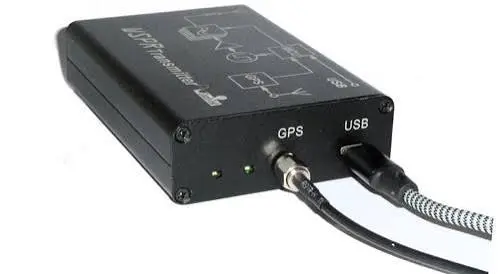
My beacon is a ZachTek WSPR Desktop Transmitter, the 80To10 model. It’s a small black box from Sweden with its own GPS receiver, so it keeps its own time and frequency with no computer attached. Plug in an antenna and power and it just runs.
Mine hops through 80, 40, 30, 20, 17, 15, 12 and 10 meters and keys up every two minutes, around the clock, at about 200 milliwatts. That’s why the numbers below get big. It’s on the air in nearly every WSPR slot, and hundreds of stations are listening for it on any given day.
WSPR gear I’ve run over the years
The ZachTek isn’t my first WSPR transmitter. I’ve been experimenting with WSPR for a while, and two earlier boxes are worth showing even though I don’t have either one anymore.
W6LVP dual-output WSPR transmitter
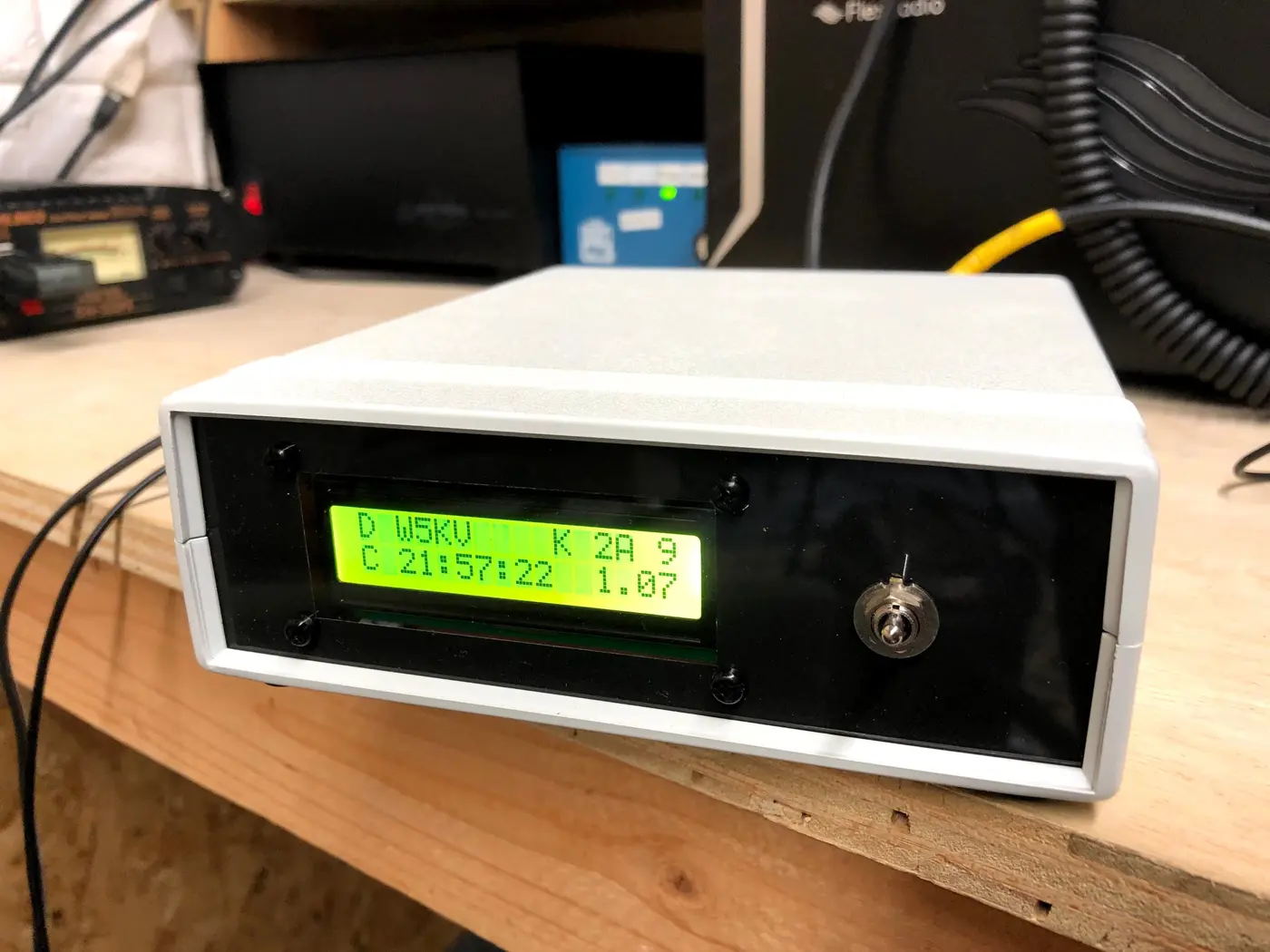
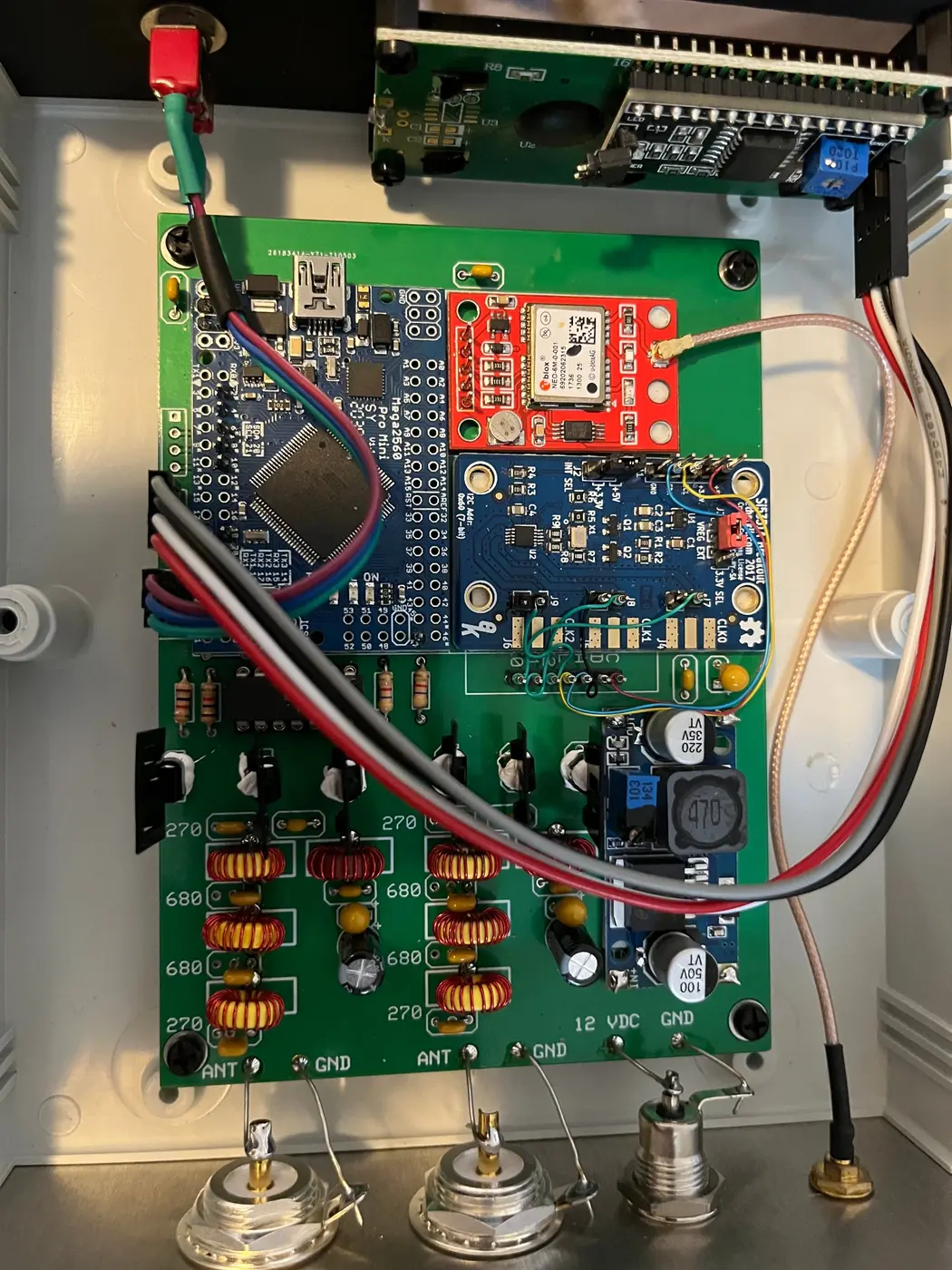
This one was custom built by W6LVP, and it let me transmit on two different antennas at the exact same time. One output went out as W5KV/A and the other as W5KV/B, so every spot told me which antenna it came from. It’s a clean way to put two antennas head to head, since both are on the air in the same two-minute slot under the same band conditions.
Inside, an Arduino Mega 2560 Pro Mini runs the show, a u-blox NEO-6M GPS module handles the timing, an Si5351 clock generator makes the RF, and each antenna output gets its own hand-wound low-pass filter. The display on the front shows the callsign and the time.
SOTABEAMS WSPRlite
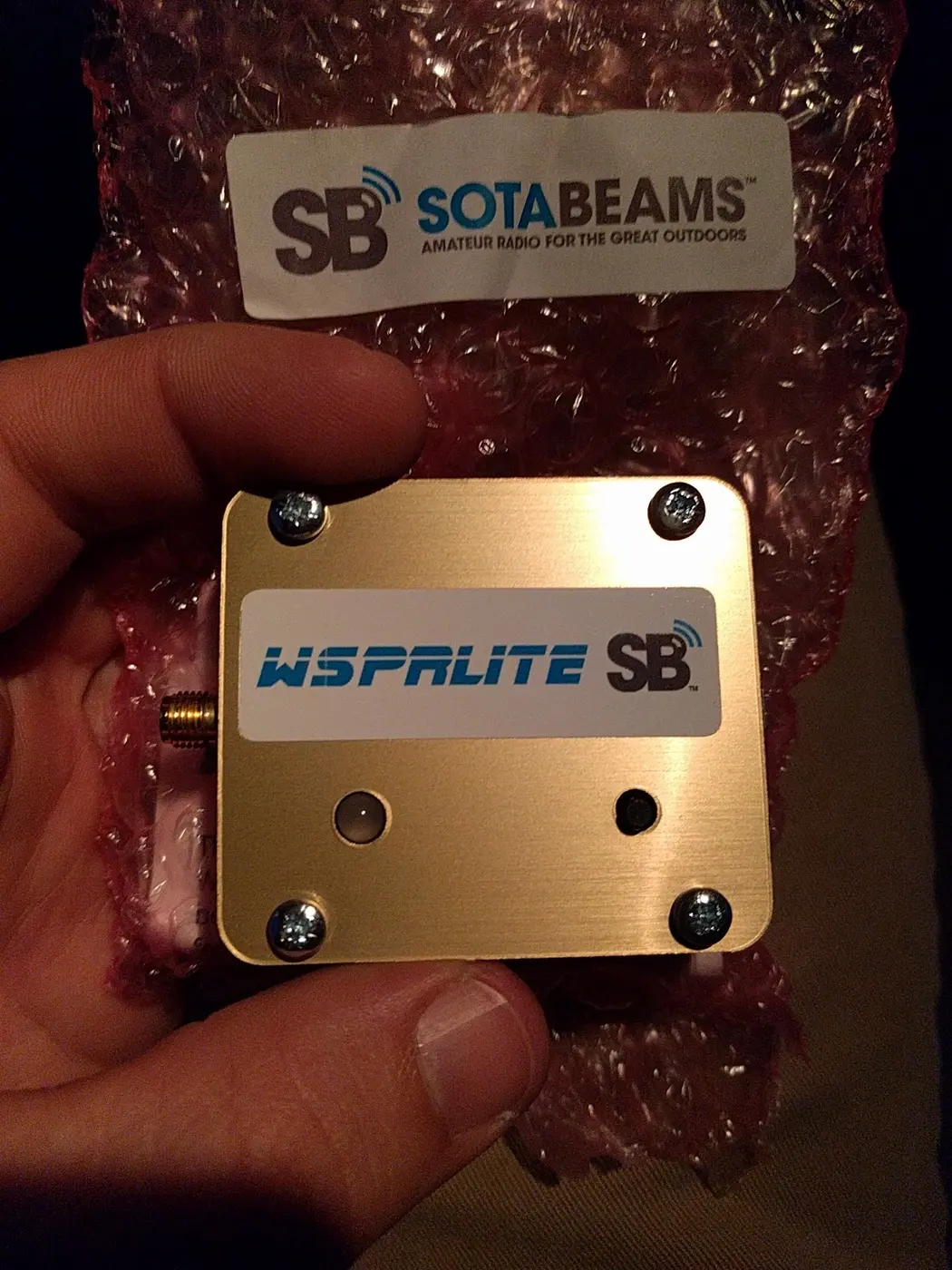
A pocket-size WSPR beacon from SOTABEAMS in the UK. It runs one band at a time, it’s small enough to hold between two fingers, and it’s about as simple as a WSPR beacon gets.
WW0WWV: a WSPRSonde at WWV
WW0WWV is the callsign of the WWV Amateur Radio Club, which operates from NIST’s WWV and WWVB site outside Fort Collins. WWV has been on the air since 1919 and moved to Colorado in 1966, and the club callsign was issued in 2019 for the station’s 100th birthday special event. I’m a big fan of this one.
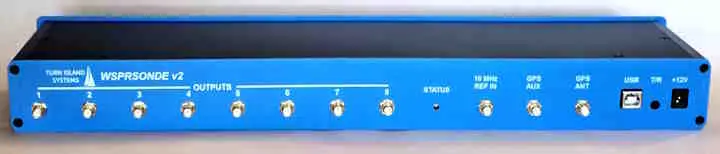
Their WSPR signal comes from a WSPRSonde-8, built by Paul Elliott, WB6CXC, at Turn Island Systems. Where my ZachTek hops from band to band, the WSPRSonde has eight independent outputs and transmits on all eight bands at the same time, continuously, at about a watt each. It’s GPS-disciplined to better than a thousandth of a hertz. That stability is the point: when the signal is that clean, any frequency shift a receiver measures is the ionosphere moving, not the transmitter drifting.
The WWV install happened in mid-2024. HamSCI’s WWV/H Scientific Modulation Working Group decided to try a WSPRSonde there, Rob Robinett, AI6VN, and Paul shipped the gear, and Dave Swartz, W0DAS, put it in. One of the questions they want answered is whether a 1-watt WSPR signal shows the same Doppler shifts researchers already see on WWV’s 10 kW broadcasts. HamSCI has since been funding more WSPRSondes across North America as part of its Personal Space Weather Station project.
Eight bands, 24 hours a day, from a quiet site in northern Colorado adds up to roughly two million spots a week. If you want to see what a really well-heard WSPR signal looks like, this is it.
Where the data comes from
Spots come from wsprnet.org through the public wspr.live database. The Kp index is from NOAA’s Space Weather Prediction Center. More on the WSPRSonde: HamSCI’s WSPRSonde page and Dave Swartz’s poster on the WWV installation.