I’ve been part of the Colorado Mesh Group since early this year, and these days I’m the Aurora regional rep. A lot has happened in the last few months, so this is a catch-up on the group and on the gear that’s been across my bench.
The group
- Out in public. We’ve been tabling at hamfests, including the Pikes Peak Megafest, with printed handouts, banners, and working nodes on the table. Ten minutes face to face does more than any forum post.
- Club talks. I’ve given MeshCore presentations to the Parker Radio Association. Hams ask the best questions, mostly about range, power, and where the line sits between licensed and unlicensed.
- A veterans channel. For Veterans Day I started a #veterans channel on the mesh. It’s open to anyone, especially vets, and it’s meant to keep going long after the holiday.
- Mesh Client keeps growing. The group’s desktop app added MeshCom as a fourth protocol this month, after hams in Europe asked for it. That puts unlicensed and licensed mesh in one app. There are fair arguments on both sides of mixing the two, and I’ll have more to say once it’s been in use a while.
- Bigger conversations. We’re talking with a few land managers and public safety folks about where repeaters could help. Nothing to announce yet.
Not everything has been smooth. Recently a bot on our local mesh flooded everyone with weather and traffic messages nobody asked for. It showed how easily one person can bog down a shared network.
What I’ve been testing
- BQ Voyage Station G3. My main rooftop repeater: solar panel, self-heating LiFePO4 battery, and a Raspberry Pi 4B running openHop Repeater, all in a steel enclosure. It has reached Cheyenne and parts of western Nebraska. Biggest lesson so far: a USB Wi-Fi dongle next to it raised the noise floor. Ethernet fixed it.
- PeakMesh Climber. A second repeater that I use for Portable Operating & camping abroad.
- RAK13302 on a RAK6421 Pi HAT. My favorite budget node. Checkout my video on an openHop install video on a Pi, because viewers kept asking and hardly anyone has covered it.
- PiMesh-1W and ZebraHAT 1W. Two 1-watt Pi HATs I compared in an earlier video.
- Elecrow ThinkNode M6. Reviewed on the channel.
- LilyGo T-Deck Plus with WADAMESH firmware. A keyboard messenger that doesn’t need a phone.
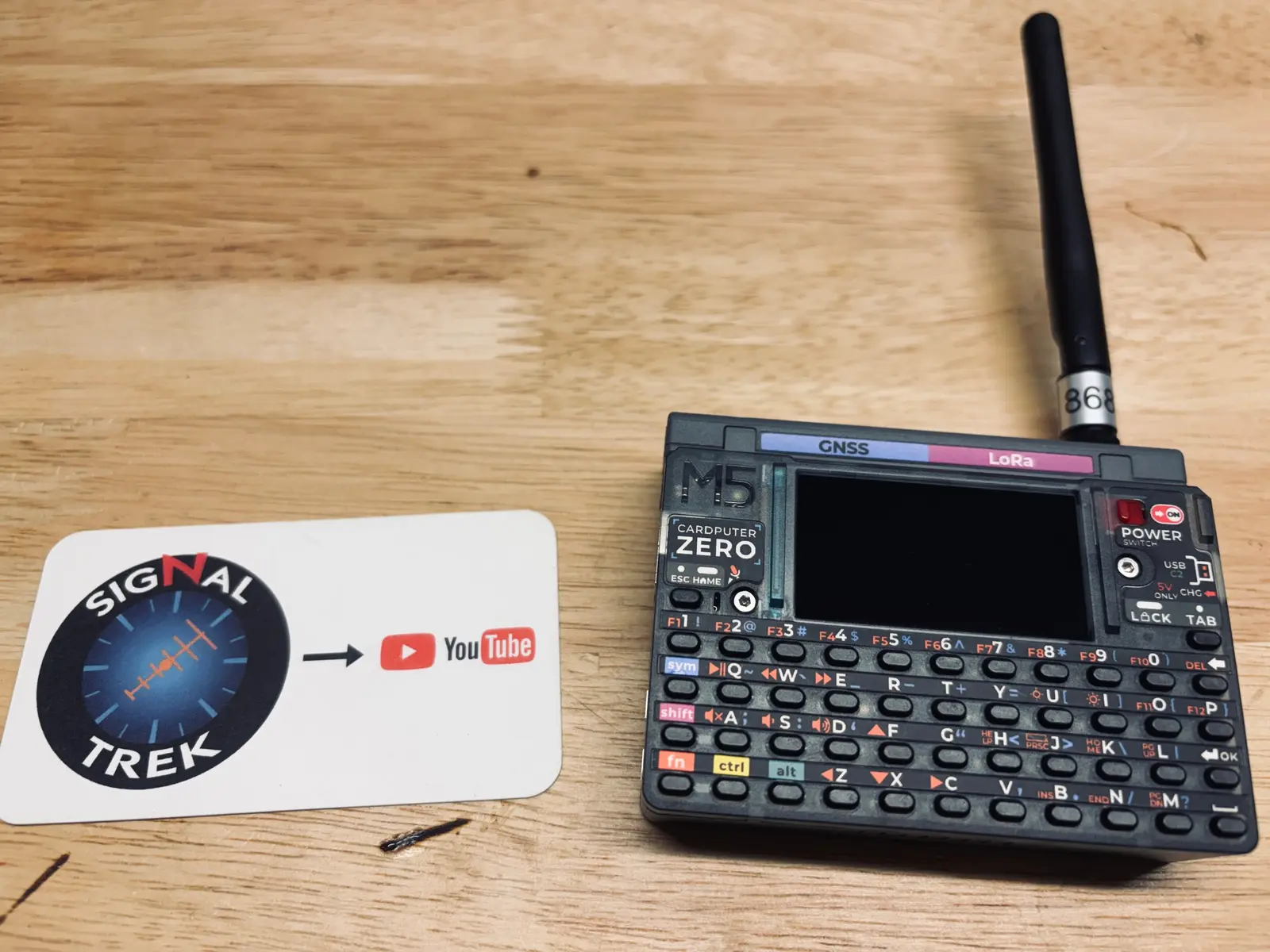
- M5Stack Cardputer Zero with the LoRa hat. The newest toy. A 30-second Short on it became my best-performing video ever, so a full deep dive is coming.
- Seeed Wio Tracker L1 Pro. A MeshCore companion device. Review coming soon.
- ACASOM 915 MHz cavity filter. Swept on the NanoVNA at Station G3 to see what it actually does.
- Homemade 21700 battery packs. I’m moving my repeaters off the pillow-style lithium packs, which I don’t trust, to 1S packs I build myself with 3D-printed holders and an AWithZ HF7 spot welder. I’d never built a battery pack before this.
- A water level sensor node. A Grove water level sensor on a RAK6421 HAT. Send it a message and it replies with the water level. It’s a desk demo for now, but flood monitoring is the idea.
Some of this gear was sent to me by the manufacturers, including Elecrow, Seeed, and AWithZ. Where that’s the case, I say so in the video.
What’s next
The Cardputer Zero w/ LoRa hat deep dive, the Wio Tracker review, Radioddity Norada Mesh radio review, & Elecrow M8 review. If you’re in the Aurora area and want to get on the mesh, come find us at the next event.
73,
Johnny, W5KV